
How Chiropractic Care Restores Shoulder Range of Motion
Main points:
- Prolonged sitting, driving, and desk work lock shoulders in limited positions, causing chronic stiffness and decreased function.
- Spinal adjustments remove pressure on nerves, decrease inflammation, improve blood flow, and allow shoulder muscles to relax so joints can regain their full range of motion without pain.
- Chiro treatment combines joint adjustments to realign bones, soft tissue work to release muscle tension and knots, and personalized programs to maintain results and prevent recurrence.
Your shoulder joint is designed for incredible mobility, offering the widest range of motion of any joint in your body. Yet this flexibility makes it inherently unstable and susceptible to problems. Daily activities like prolonged sitting, driving, and desk work keep your shoulders locked in limited positions, restricting their natural movement patterns and leading to chronic stiffness, discomfort, and decreased function over time.
Chiropractic treatment can help reverse this damage by realigning the spine and shoulder joints, reducing nerve interference, and restoring the natural mobility your shoulders need to function properly and pain-free.
Read on to find out more.
What is the shoulder’s full range of motion?
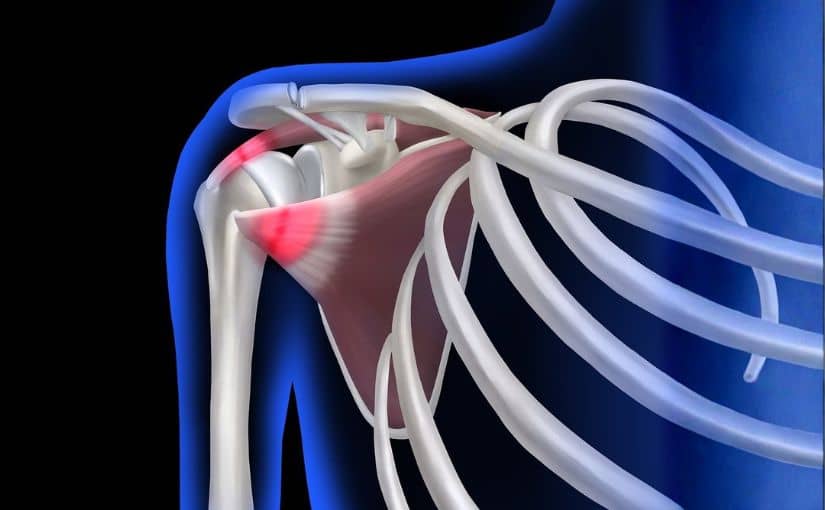
The shoulder joint achieves exceptional mobility through the coordinated movement of three bones: the clavicle, scapula, and humerus. To illustrate the shoulder’s complete range of motion, the table below outlines the six essential movement patterns: Flexion, Extension, Abduction, Adduction, Medial Rotation, and Lateral Rotation.
Check the table for details:
| Movement | Technical Definition | Example/Action | Normal Range (Degrees) |
|---|---|---|---|
| Flexion | Decreases the angle between two parts; arm moves forward. | Raising the arm straight up in front of the body. | 180° (Full overhead) |
| Extension | Increases the angle between two parts; arm moves backward. | Reaching hands behind the back (e.g., for a back pocket). | 45° to 60° |
| Abduction | Arm movement away from the middle of the body. | Raising the arm straight out and up from the side. | Around 150° |
| Adduction | Arm movement towards the middle of the body. | Hugging oneself or crossing the arm across the chest. | 30° to 50° |
| Medial Rotation (Internal) | Forearm moves toward the body (elbow bent at 90°). | Swinging the forearm inward (like shutting a cabinet door). | 70° to 90° |
| Lateral Rotation (External) | Forearm moves away from the body (elbow bent at 90°). | Swinging the forearm outward away from the body. | 90° |
What are the benefits of achieving the shoulder’s full range of motion?
Good shoulder mobility is important for daily tasks like reaching overhead, getting dressed, and washing your hair. Most people don’t realize how much shoulder movement these basic activities require until they lose their range of motion, whether temporarily or permanently. And these are just the fundamentals!
Even if you work at a desk all day, healthy shoulder movement matters. Simple tasks like reaching for objects, typing, and other office activities depend on shoulder flexibility. For people in more physical jobs, proper shoulder mobility is a mustl for working effectively and comfortably.
Your quality of life also depends on being able to enjoy hobbies and activities you love. Whether you swim, play tennis, garden, paint, or play instruments, limited shoulder mobility can prevent you from doing what brings you joy. Even activities like running require some shoulder movement!
If you have young children or grandchildren, you need to reach in awkward directions, lift things overhead, push from unusual angles, and more. Shoulder mobility affects every part of your life, yet many people let it decline over time, accepting that they simply can’t do certain things anymore.
The good news? It doesn’t have to be this way. You can maintain healthy shoulder movement and stay active in the things you love as you age.
How does chiropractic restore shoulder range of motion?
Chiropractic treatment helps restore shoulder mobility by using a combination of techniques like joint adjustments and movement therapy to improve how the joint functions. Read on for details.
Chiropractic treatment enhances range of motion using a three-part strategy targeting joint mechanics, muscle tension, and sustained results.
Loosen up restricted joints
- Adjustments use controlled force to realign joints and the spine, removing nerve pressure and friction for freer movement.
- Soft tissue work (massage, myofascial release) addresses tight muscles that limit motion, releasing tension and correcting imbalances to restore flexibility.
- Exercise programs maintain progress through personalized stretching and strengthening that increase joint flexibility, stabilize muscles, and prevent recurrence.
This combined approach provides both immediate and lasting mobility gains, improving overall flexibility and physical function.
Restore nerve function
Chiropractic adjustments correct misalignments and restore proper nerve function. By realigning your spine, chiropractors remove pressure on nerves and tissues, decreasing inflammation and improving blood flow. As pressure releases, muscles relax and your joints regain their natural range of motion.
With proper spinal alignment and optimal nerve function, your body moves as designed. You regain flexibility and the ability to perform daily activities: bending, reaching, walking, and exercising without restriction or pain.
Address muscular imbalance
Chiropractors pair spinal adjustments with complementary soft tissue work to release chronic tension and muscle knots that restrict movement. These techniques target muscles like your chest and upper back; common areas where tightness inhibits range of motion.
Reclaim your shoulder mobility with Posture Perfect Chiropractic
Through a combination of precise joint adjustments, targeted soft tissue therapy, and personalized exercise programs, chiropractors help your shoulders regain their natural flexibility and stability. Whether you’re struggling to reach overhead, getting dressed comfortably, or returning to hobbies like swimming or tennis, restoring shoulder mobility transforms your daily life and your ability to do what you love.
The best time to address shoulder stiffness is now before limited mobility becomes a permanent barrier to the activities and independence you value. With proper chiropractic care, you can maintain healthy shoulder function throughout your life and stay active, comfortable, and mobile for years to come.
Don’t let shoulder stiffness hold you back. Posture Perfect Chiropractic can help restore your shoulder mobility and help you reclaim their freedom of movement.
Frequently asked questions
Prolonged sitting, driving, and desk work often lock the shoulders in limited positions, which restrict normal movement patterns and can lead to chronic stiffness and discomfort over time.
Chiropractic care improves shoulder range of motion through spinal and joint adjustments, soft tissue therapies (like massage), and personalized exercise programs that together realign joints, relieve nerve pressure, and release muscle tension.
Yes. Chiropractic adjustments are gentle and safe. Chiropractors use various techniques suited to each patient and monitor for any underlying conditions that may require a different approach or referral.